
What should you charge? The answer depends on your country, subject, experience, and format. Here's a data-driven overview of tutoring rates in 2026 based on marketplace data and industry surveys.
Rates by Country
United States
| Subject Category | Beginner | Experienced | Expert |
|---|---|---|---|
| School subjects (K-12) | $20–30/hr | $35–50/hr | $55–80/hr |
| Test prep (SAT, ACT, AP) | $30–45/hr | $50–80/hr | $80–150/hr |
| College level | $30–50/hr | $50–80/hr | $80–120/hr |
| Languages | $20–35/hr | $35–55/hr | $55–80/hr |
| Music | $25–40/hr | $40–65/hr | $65–100/hr |
| Programming/CS | $30–50/hr | $50–80/hr | $80–150/hr |
Average across all subjects: $35–55/hr
United Kingdom
| Subject Category | Beginner | Experienced | Expert |
|---|---|---|---|
| GCSE subjects | £15–25/hr | £25–40/hr | £40–60/hr |
| A-Level subjects | £20–35/hr | £35–55/hr | £55–80/hr |
| University level | £25–40/hr | £40–65/hr | £65–100/hr |
| Languages | £15–30/hr | £30–50/hr | £50–75/hr |
| Music | £20–35/hr | £35–55/hr | £55–80/hr |
Average across all subjects: £25–45/hr
Russia
| Subject Category | Beginner | Experienced | Expert |
|---|---|---|---|
| School subjects | 600–1200 ₽/hr | 1200–2500 ₽/hr | 2500–5000 ₽/hr |
| ЕГЭ/ОГЭ prep | 1000–2000 ₽/hr | 2000–4000 ₽/hr | 4000–8000 ₽/hr |
| University level | 1000–2000 ₽/hr | 2000–4000 ₽/hr | 4000–6000 ₽/hr |
| Languages | 800–1500 ₽/hr | 1500–3000 ₽/hr | 3000–5000 ₽/hr |
| Programming | 1000–2500 ₽/hr | 2500–5000 ₽/hr | 5000–10000 ₽/hr |
Average across all subjects: 1500–3000 ₽/hr
Germany
| Subject Category | Beginner | Experienced | Expert |
|---|---|---|---|
| School subjects | €15–25/hr | €25–40/hr | €40–60/hr |
| Abitur prep | €20–35/hr | €35–55/hr | €55–80/hr |
| University level | €25–40/hr | €40–60/hr | €60–90/hr |
| Languages | €15–30/hr | €30–50/hr | €50–70/hr |
Average across all subjects: €25–40/hr
Other Markets (Approximate Averages)
| Country | Average Range |
|---|---|
| Canada | CAD 30–55/hr |
| Australia | AUD 35–65/hr |
| France | €20–40/hr |
| India | ₹300–1000/hr |
| Brazil | R$40–100/hr |
| Turkey | ₺200–600/hr |
What Affects Your Rate
Experience Level
| Level | Description | Rate Premium |
|---|---|---|
| Beginner (0–2 years) | New to tutoring, learning the craft | Base rate |
| Experienced (3–7 years) | Proven results, steady client base | +40–70% |
| Expert (8+ years) | Top credentials, waitlisted, specialized | +100–200% |
Subject Demand
High-demand subjects where tutors are scarce command 30–50% premiums: - Advanced math (calculus, statistics) - Physics - Computer science / programming - Standardized test prep (SAT, IELTS, ЕГЭ)
Oversupplied subjects (basic English, elementary math) tend toward the lower end.
Format
| Format | Typical Adjustment |
|---|---|
| Online | Base rate (or 10–20% discount) |
| In-person | +10–20% (travel time, space costs) |
| Group (per student) | -40–60% per student (but higher total) |
| Package deal | -5–15% per lesson (bulk discount) |
Location Within Country
Capital cities / major metros: +20–40% over national average Suburban areas: approximately national average Rural / small towns: -10–30% below average
Credentials
| Credential | Typical Premium |
|---|---|
| Degree in subject | +10–20% |
| Teaching certification | +15–25% |
| Exam score record (e.g., "my students average 90th percentile") | +20–40% |
| PhD or advanced degree | +30–50% |
Online vs. In-Person Gap Is Shrinking
In 2020, online tutoring was consistently 15–25% cheaper than in-person. By 2026, the gap has narrowed to 5–15% in most markets. Major reasons:
- Students now prefer online (no travel)
- Online tutors have lower overhead → can charge competitive rates
- Quality tools for screen sharing, whiteboards, and document collaboration
- International competition pushes in-person tutors to stay competitive
For many subjects, online is now the default format, not a discount option.
Group Lesson Economics
Group lessons are often overlooked but can dramatically increase hourly income:
| Students | Per-Student Rate | Your Hourly Income |
|---|---|---|
| 1 (individual) | $40 | $40 |
| 2 | $25 | $50 |
| 3 | $20 | $60 |
| 4 | $18 | $72 |
| 5 | $15 | $75 |
Students get a lower per-hour rate. You earn more total. Everyone wins.
How to Use This Data
- Find your market — identify your country, subject, and experience tier
- Check local competitors — browse tutor listings in your area for real prices
- Set your rate at or slightly above the midpoint for your tier
- Track and adjust — if you fill up fast, raise prices; if inquiries are slow, consider adjusting
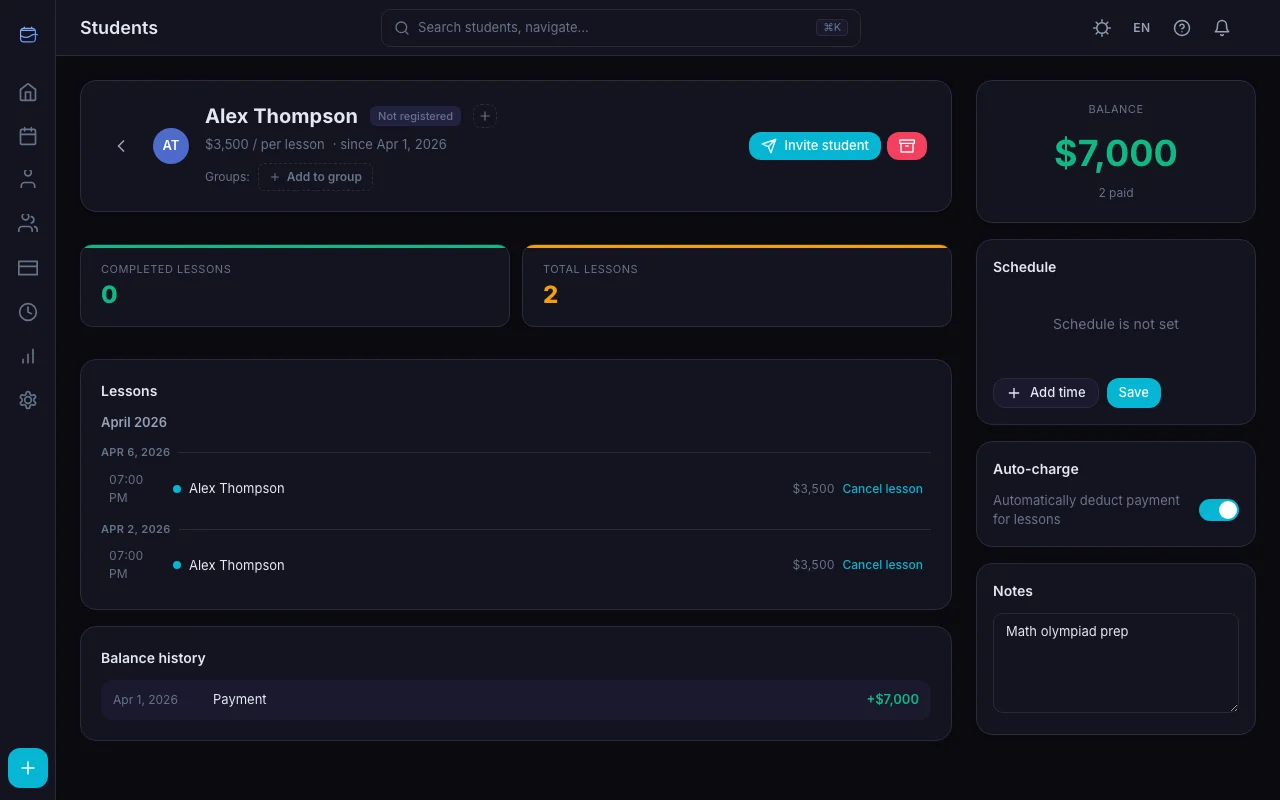
TeachersFlow supports per-student pricing in 16 currencies, so you can set the right rate for each student and let auto-charge handle the rest.
Track Your Rate
TeachersFlow calculates your actual average rate (income ÷ hours) in the Stats tab. Compare your real number to the benchmarks above.
14 days of full Pro access — no card required.