
A student cancels 2 hours before the lesson. You can't fill the slot. That's $30–50 gone. Multiply by a few times a month across several students, and you're losing $200–500/month — just from cancellations.
Most tutors eat the cost because they don't have a policy, or they have one but don't enforce it. Here's how to fix that.
The Real Cost of Cancellations
Let's do the math:
| Scenario | Monthly Loss |
|---|---|
| 2 cancellations/week at $30/lesson | $240/month |
| 3 cancellations/week at $25/lesson | $300/month |
| 1 cancellation/week at $50/lesson | $200/month |
Over a year, that's $2,400–$3,600. Enough for a vacation. Or a new laptop. Or simply not worrying about rent for several months.
Build a Clear Cancellation Policy
The solution isn't being strict — it's being clear. Students cancel because life happens. Your policy should:
- Define a notice period — how far in advance must a student cancel?
- 24 hours is the industry standard
- 12 hours for more flexible arrangements
-
48 hours for premium/high-demand slots
-
Define the consequence — what happens if they cancel late?
- Full charge (lesson price deducted from balance)
- Partial charge (50%)
-
Free reschedule within the same week
-
Define exceptions — what counts as an emergency?
- Genuine illness (your discretion)
- Family emergencies
- First offense grace period
Sample Policy
"Lessons can be cancelled or rescheduled with at least 24 hours notice at no charge. Cancellations with less than 24 hours notice will be charged at full lesson price. Exceptions for medical emergencies."
Communicate It From Day One
The policy only works if students know about it before they need it:
- Tell new students during the first lesson
- Include it in your intro message or welcome document
- Remind gently after the first late cancellation: "Just a reminder about the 24-hour policy..."
Enforce It With Your Tools
Having a policy and enforcing it are different things. Manually tracking who cancelled when and whether to charge is exhausting. Automate it.
In TeachersFlow
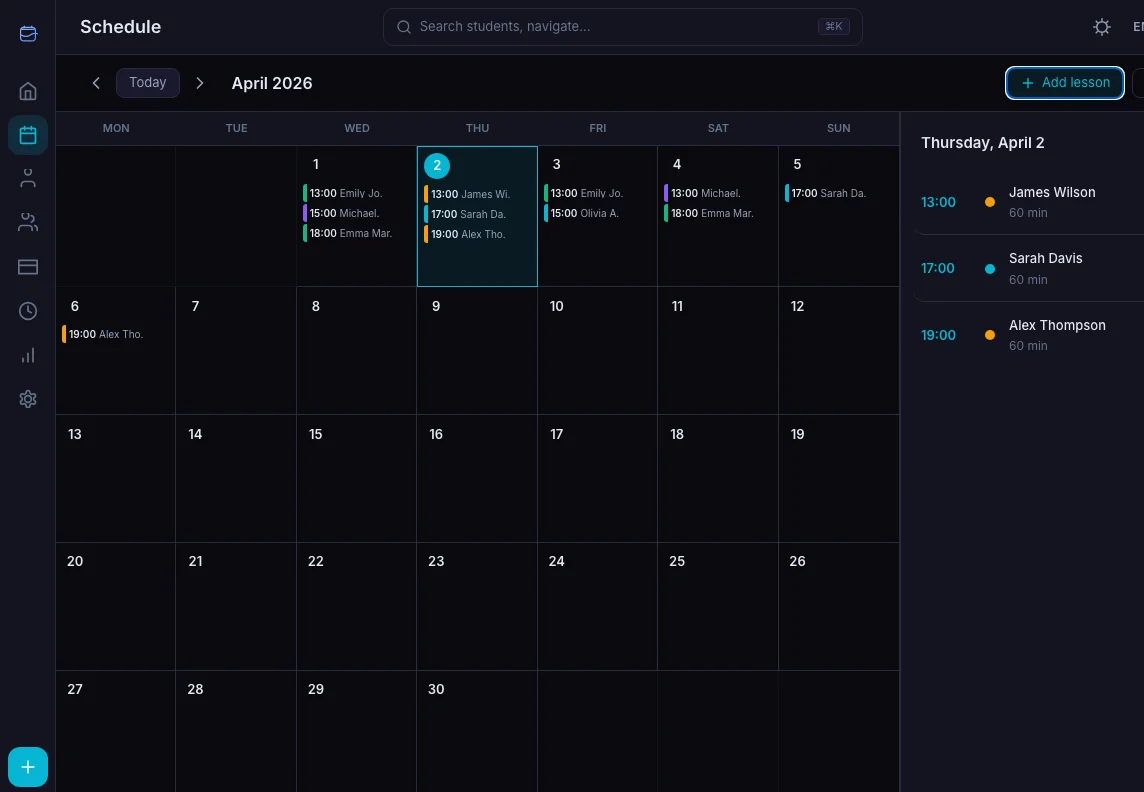
When you cancel a lesson, the system asks whether to charge the student's balance:
- Charge → the lesson price is deducted as if the lesson happened
- Don't charge → the balance stays the same
This makes enforcement effortless: - Late cancellation (less than 24 hours) → cancel with charge - Timely cancellation (24+ hours) → cancel without charge - You decide per lesson — no rigid automation
The balance history shows every cancellation charge, so the student can see it in their portal. Transparent. No awkward conversations.
Track Cancellation Patterns
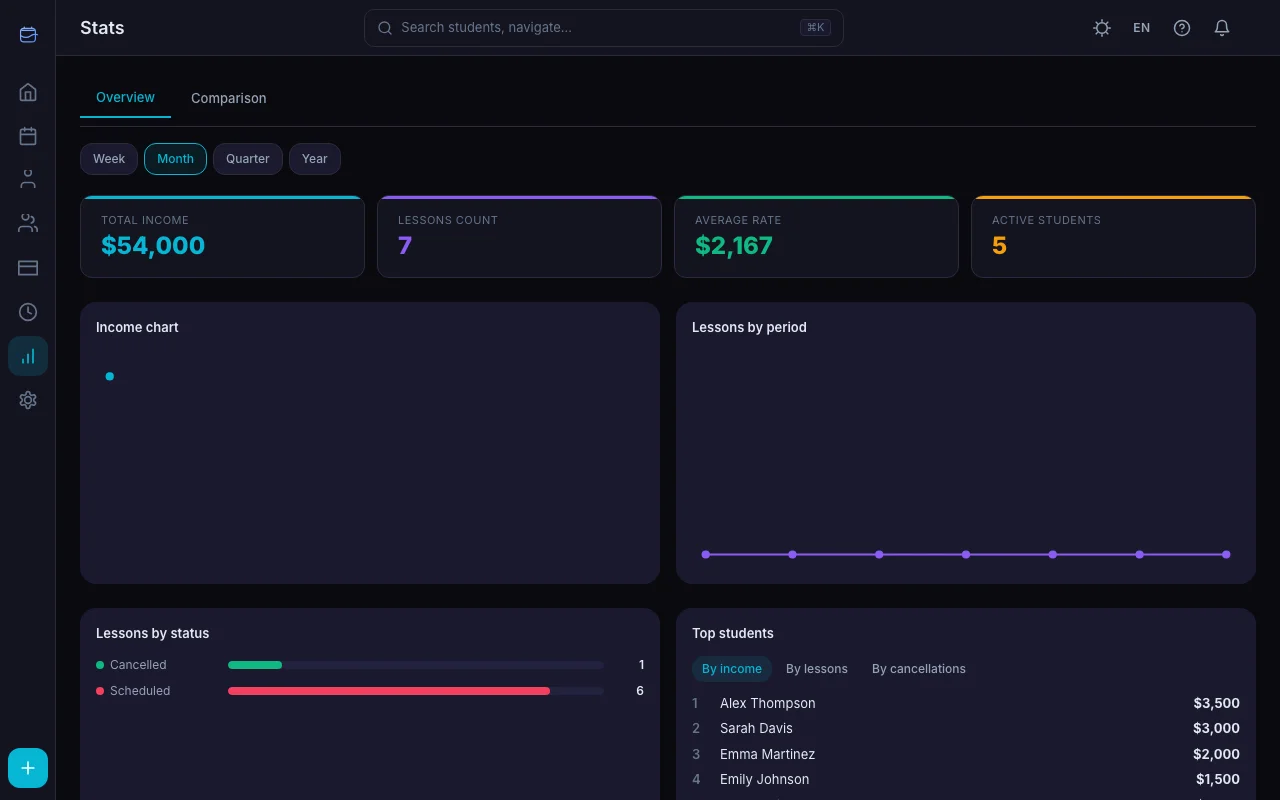
TeachersFlow's Stats tab shows cancellation rates in two ways:
- Lessons by Status — the bar chart shows completed vs. cancelled. If cancelled lessons are 15%+ of total, you have a pattern problem.
- Top Students by Cancellations — shows which students cancel most often. If one student cancels 40% of lessons, you need a direct conversation.
Prevention Is Better Than Enforcement
Policies handle the damage, but reducing cancellations is better:
Use Lesson Reminders
TeachersFlow sends automatic reminders before lessons (choose from 5 to 60 minutes ahead). Students who forget are the #1 source of "oops, I can't make it." A reminder gives them a heads-up to prepare or communicate early.
Set Recurring Schedules
Students with recurring weekly lessons cancel less than those who book ad-hoc. The routine becomes a habit. Set up recurring schedules in TeachersFlow for all regular students.
Prepayment Psychology
When students prepay (balance model), they're less likely to cancel — the money is already committed. This is why the prepayment + auto-charge model reduces cancellations naturally. A student with $0 balance who "forgets" to pay has less skin in the game than one who already put down $200.
Address Serial Cancellers
If a student cancels more than 25% of lessons, have a direct conversation:
- "I've noticed we've had several cancellations recently. Should we adjust the schedule to a time that works better?"
- "Would a different day work more reliably?"
- "If things are too busy right now, we can pause and resume later."
Often, the issue is a schedule conflict, not disrespect. Fix the root cause.
The Awkwardness Problem
Many tutors don't enforce cancellation charges because it feels uncomfortable. Reframe it:
- You booked time for them. That time can't go to another student on short notice.
- They'd expect the same. If they booked a hotel and no-showed, they'd be charged.
- It's professional. Having clear terms isn't rude — it's respectful of both parties' time.
- The tool does it for you. When the charge happens automatically via balance deduction, there's no personal confrontation. It's just how the system works.
What Good Looks Like
| Metric | Unhealthy | Healthy |
|---|---|---|
| Cancellation rate | >15% | <5% |
| Late cancellations | >50% of all cancellations | <20% |
| Charged cancellations | 0% (no policy) | 80%+ of late ones |
| Monthly income loss | $200+ | <$50 |
Take Control
TeachersFlow gives you cancellation charging, balance tracking, reminders, and analytics to stop the income leak. Set a policy, enforce it, and keep your schedule productive.
14 days of full Pro access — no card required.